


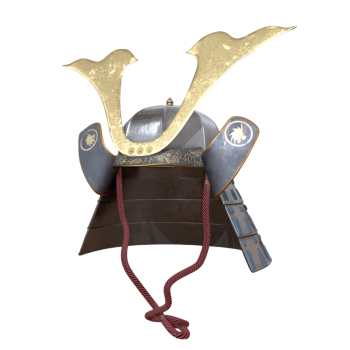
Japanese Samurai Helmet
Japanese samurai helmet, called "kabuto" (kabu) in Japanese. It is an important part of traditional Japanese armor and is mainly used to protect the head and neck of the samurai. The dome part is riveted from several metal plates and is used to protect the top of the head. The golden horn decoration on the helmet is a front stand, designed to show the wearer's strength and serve as a deterrent to enemies on the battlefield. Samurai helmet is not only protective equipment, but also a symbol of samurai identity, status and family tradition.
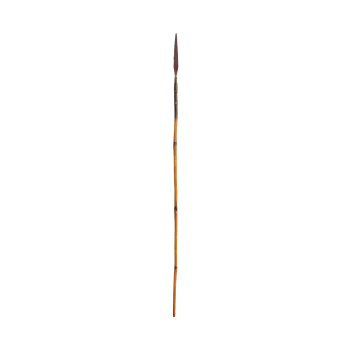
Simple bamboo spear

Short curved knife
It is a curved single blade sword that originated in the Middle East and has a long history, appearing around 2000 BC. Known for its elegant curved shape and sharp cutting edge, the blade is usually curved with a sharp tip, making it easy to stab and cut. The design of the knife handle is diverse, some are decorated beautifully, while others are simple and practical, suitable for the needs of different users. It is a practical weapon and a symbol of identity and status. In history, it was a iconic equipment for many Middle Eastern and Asian aristocrats and warriors. Over time, the short curved sword gradually evolved into a cultural symbol and was used in various rituals and celebrations.

Cross shaped long curved knife
It is an ancient and unique weapon that originated in the Middle East, especially with a long history in Persian culture. Known for its curved blade and cross shaped handle, it is usually forged from high-quality steel and extremely sharp. The curved design of the blade not only increases its attack range, but also enhances its cutting ability, making it highly lethal on the battlefield. The handle design of the cross shaped long curved knife helps provide better grip and control, while also being decorative. Over time, the cross shaped long curved sword gradually evolved into a cultural symbol, often appearing in various works of art and historical documents.
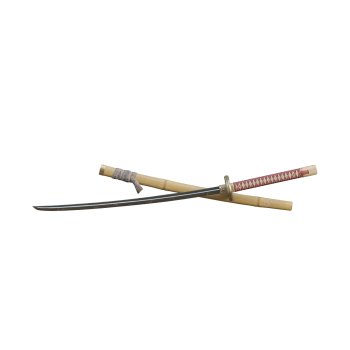
3D model of Japanese samurai sword
Also known as the Japanese sword or samurai sword, it is a traditional Japanese single blade sword renowned for its sharp, curved blade and exquisite craftsmanship. Not only is it a symbol of the Japanese samurai class, but it is also an important part of Japanese culture. The production technology is very complex, involving forging, quenching, tempering, and fine grinding processes of the blade. The blade usually presents a unique curve, which not only increases the cutting force of the blade, but also makes it more flexible when swung. The handle design takes into account the user's grip comfort and efficiency, while the sheath is usually made of hardwood or metal, which not only protects the blade but also reflects a certain degree of decoration.
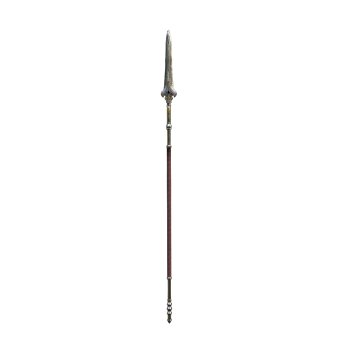
Exquisite long spear weapon

Ancient Viking copper scepter
It is a copper scepter used by ancient Vikings. Compact and lightweight, usually cast from brass, with a small head and a hole for installation on a wooden handle. Easy to carry, suitable for all day wear, ready for self-defense at any time. The design is simple and practical, and the copper material on the head can generate a significant impact force when struck. Viking warriors and Russian warriors both used this weapon, which was widely circulated in Europe, Scandinavia, and Russia from the 9th to the 11th century. The replica scepter mentioned has a head made of cast brass and is mounted on a hardwood handle, reproducing the style of early medieval weapons.
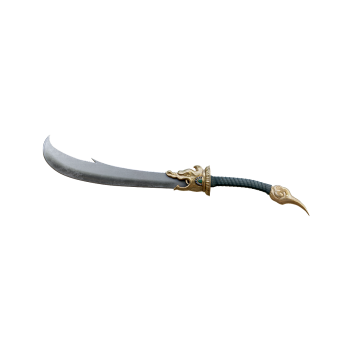
Longtou Big Knife

14th century armed sword
It is an early 14th century armed sword belonging to the XIV type in the Oakeshott classification. Known for its unique design and historical value. The sword body is wide and usually has four thin central blood grooves that extend to about half of the sword body. The hilt is designed for one handed use and is equipped with a slightly curved handguard and a wheel shaped hilt. It was very common in 13th and 14th century Europe. As soldiers transitioned from lock armor to plate armor, the use of this sword type in combat also changed, typically used in conjunction with small shields. It is an important reference for studying the development of medieval swordsmanship.
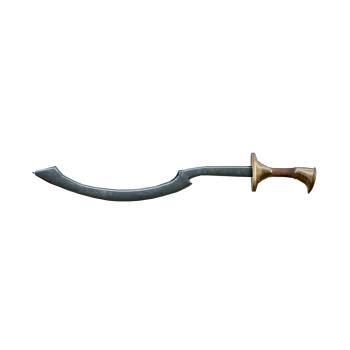
The sickle shaped sword of ancient Egypt
Also known as' Khepash ', it is a symbolic weapon in ancient Egyptian civilization, with a history dating back to around 3000 BC. The characteristic is that the sword body is curved, resembling a crescent moon, and the sword tip is sharp. Not only is it a weapon in actual combat, but it is also a symbol of power for pharaohs and senior officials, commonly seen in religious ceremonies and celebrations. The design gives it a unique advantage on the battlefield, with a curved sword body that increases the range and power of strikes, while the sharp tip of the sword can be used for stabbing. Over time, the Khenpash gradually disappeared from the battlefield, but its status as a symbolic weapon remained unchanged.
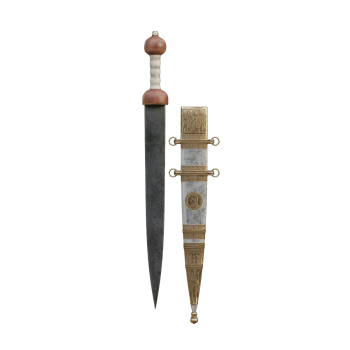
The Sword of Tiberius in Ancient Rome
It is a famous ancient Roman sword and its scabbard, discovered near the Rhine River in Mainz, Germany. Since 1866, it has been a collection of the British Museum, donated to the museum by philanthropist Felix Slade. This sword is made of iron, and its scabbard is made of bronze plated with tin and gold. The decoration on the scabbard depicts the scene of Tiberius ceding military victory to Augustus after a successful Alpine campaign. Augustus, half naked, sat in Jupiter's seat, flanked by the Roman goddess of victory and the god of Mars Urtor, while Tiberius, dressed in military uniform, presented a small statue of the goddess of victory to Augustus.
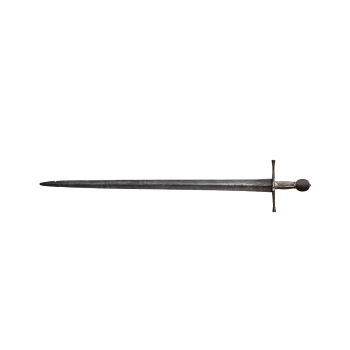
15th century armed sword
Also known as the Knight Sword, it was a cross shaped sword used with one hand during the Middle Ages. This type of sword is straight edged and double-edged, with a handle designed for one handed use and a blade length of approximately 70 to 80 centimeters. Widely used between approximately 1000 and 1350 and often depicted in contemporary art works. In the 14th and 15th centuries, with the development of plate armor, the long sword emerged. The long sword is longer and heavier than the armed sword, designed for use with both hands to tackle more advanced armor challenges, and its longer attack range is also more suitable for infantry combat.
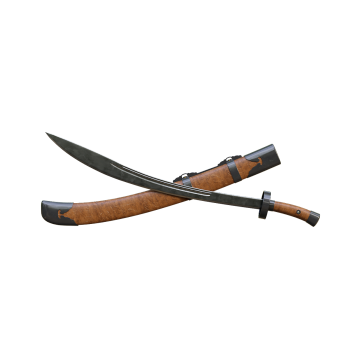
Chinese Qing Dynasty Sword
Known as the 'Qing Sword', it is one of the representatives of ancient Chinese cold weapons. Not only sharp and practical, but also exquisitely crafted, with high artistic and historical value. There are various types, including official swords, folk swords, etc. Among them, official swords embody the ultimate craftsmanship of that time. There are various shapes, and the sword body is usually slender and straight. During the Qianlong period, the imperial "Heaven, Earth, and Man" series of swords were the pinnacle of craftsmanship. These swords were not only used in actual combat, but also as symbols and ceremonial items of the royal family. The design and production of Qing Jian integrated the influence of Chinese and foreign cultures at that time, and is a witness to cultural exchange between China and foreign countries.

Medieval axe gun
It is a composite weapon that combines the functions of an axe and a firearm, typically consisting of a long handle and an axe blade, with a barrel mounted on one side of the axe blade. In certain historical periods, such as the Middle Ages and Renaissance, it was used for battlefields and hunting. Allow users to use the axe part for slashing in close combat, while using firearms for shooting from a distance. Due to its weight and complexity, axe guns may not be as flexible as single function weapons in practical use. The design of the axe gun also reflected the development of weapon manufacturing technology at that time and the demand for tactical diversity. It is no longer used as a collectible.
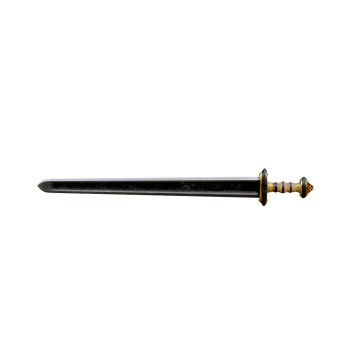
Medieval Anglo Saxon sword
It is a sword from early medieval Europe, mainly popular in England from the 5th to the 11th century. Known for its excellent craftsmanship and combat performance. Usually made of iron or steel, with a slender blade on both sides and a sharp tip, suitable for stabbing and chopping. The hilt of the sword is often exquisitely decorated, reflecting the social hierarchy and status symbols of that time. The production technology is quite advanced, and the sword body has been folded and forged multiple times to enhance its durability and sharpness. Over time, design and manufacturing technologies continue to evolve, but their basic features and functions remain unchanged. It is an important weapon for warriors and an important component of the cultural and social structure at that time

TK-502 single handed curved knife
It is a one handed curved knife known for its unique design and outstanding performance. The blade has an elegant curve, suitable for one handed grip, making it easy to wield quickly and attack accurately. The blade is sharp and forged from high-quality steel, ensuring excellent cutting ability and durability. The handle design conforms to ergonomic principles, providing a good grip and control, and can maintain stability even in intense battles. Not only is it a practical weapon, but it is also a beautiful artwork. Whether for practical use or as a collectible, TK-502 is a good choice.

Big Bone Double Hand Sword
The two handed bone sword is an ancient and mysterious weapon, usually made of sturdy bones, with a slender blade and a hilt that can hold both hands tightly to increase strength and speed when wielded. This type of sword is not commonly seen on ancient battlefields, but once it appears, it often represents the user's extraordinary strength and combat skills. Due to its rarity and uniqueness, the two handed bone sword is regarded as a symbol of power and status in many cultures. However, due to the special nature of its production materials, the two handed bone sword is not commonly seen in reality, but rather exists more as a cultural symbol or an imaginative presence in artistic creation.

VikingShield Viking Shield Copper Shield
The Viking shield is a defensive weapon used by the Vikings in ancient Northern Europe and is also one of their symbols. Viking shields are typically made of wood and covered with metal or leather to increase their strength and durability. Usually circular or elliptical in shape, with a diameter of approximately 90 to 120 centimeters. The center of a shield usually has a metal round shield ornament, which may be engraved with patterns, symbols, or motifs to display the owner's identity and the family's emblem. They not only showcase a part of ancient Nordic culture and warfare methods, but also become precious witnesses to the history of the Viking Age.

Longquan Tai Chi Sword Martial Arts Performance Morning Exercise Cold Weapon Gift Collection Copper Boutique Tai Chi Knife

Popular Models
Honey Badger (3D animated model)
192 View
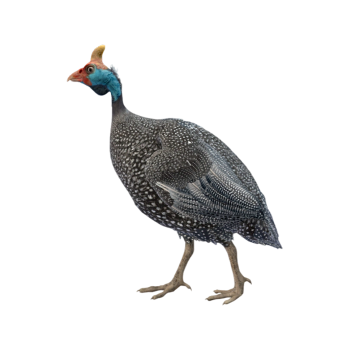
Guinea fowl (3D animated model)
163 View
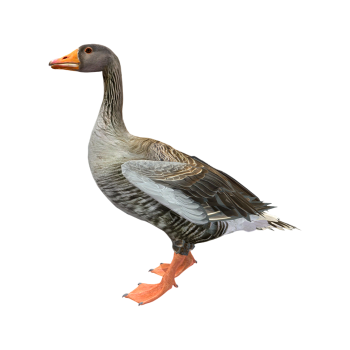
Wild Goose (3D animated model)
185 View
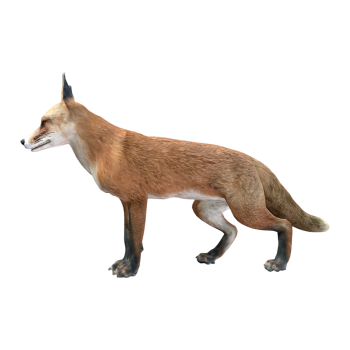
Red Fox (3D animated model)
153 View
Random Model
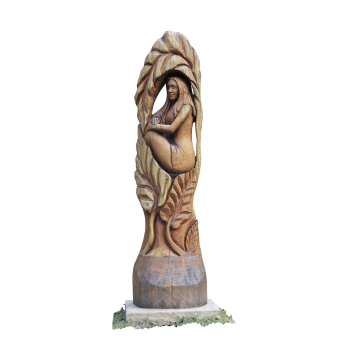
Wooden girl statue-Jiří Nekola
902 View

a key
881 View


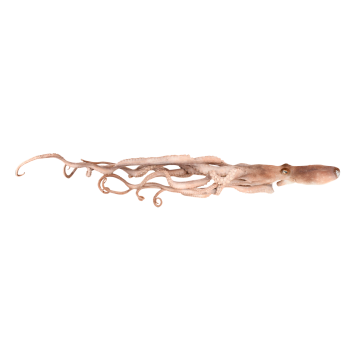
Samoan Octopus Specimen
461 View



3D model of engine oil bottle
1186 View
